CETL goes to POD 2025
Reports from the 50th annual POD Network conference in San Diego
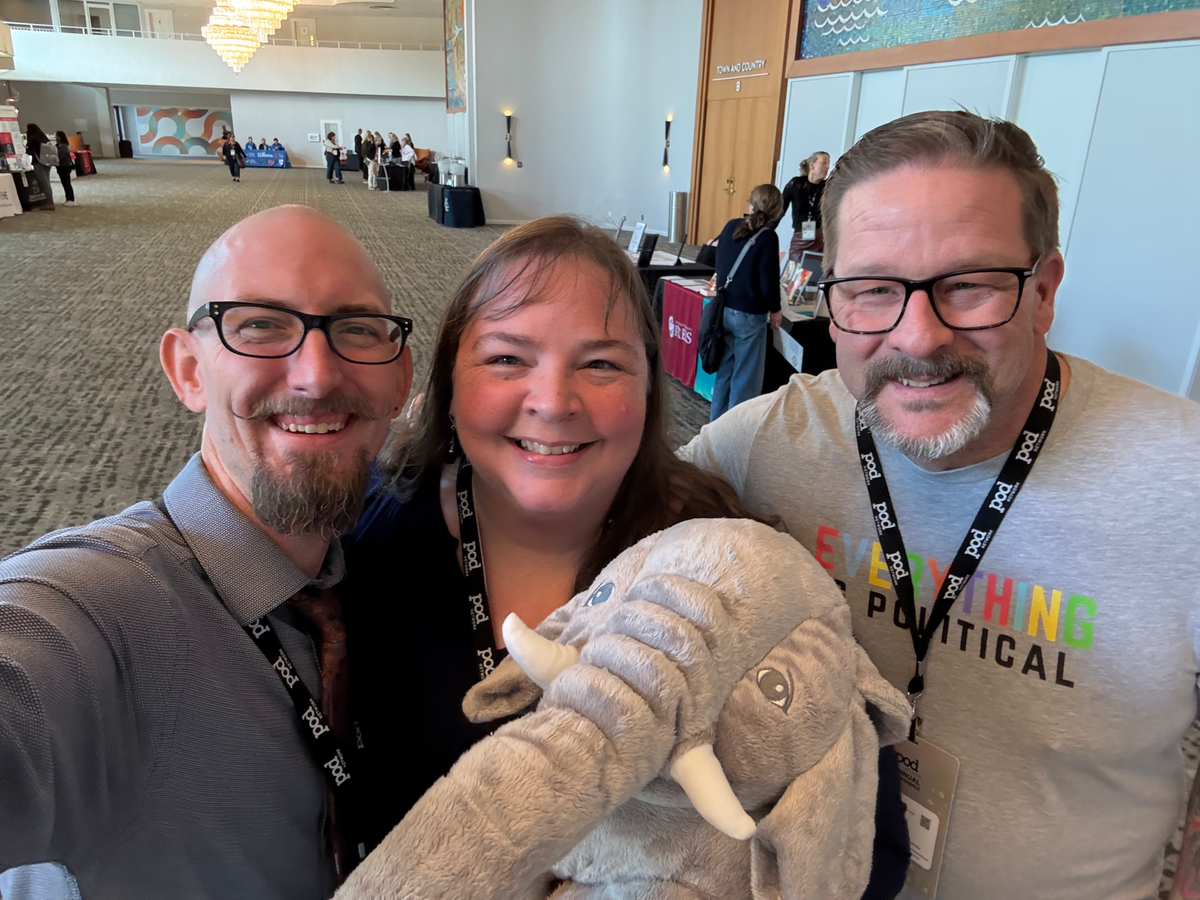
Just before the Thanksgiving holiday, CETL staff Emily, Josh, and Liz made their annual trip to the POD Network Conference, hosted this year in San Diego. While there, they caught up with fellow educational developers and learned more about the great work being done at centers for teaching and learning all around the country, and the world. Here are some themes and highlights:
Grading and Grade Reform
Josh’s main contribution to POD this year was facilitating an all-day pre-conference workshop called “A Toolkit for Grading Reform Initiatives on Your Campus.” Drawing on his extensive work on grades and grading, Josh introduced attendees to a variety of research-based tools for advancing grading reform initiatives at scale and shared strategies for moving the conversation forward.
Emily also attended several grading-related events, including a research talk about a faculty learning community centered on alternative grading, by Breana Bayraktar, and a workshop session on “Building Support for Negotiated Grading,” facilitated by Jessica Tinklenberg and Jeremy Schnieder. Another highlight was an informal meetup of educational developers who were interested in supporting alternative grading practices on their campuses.
The big takeaway: more and more faculty are interested in alternatives to traditional grading, and there are many ways that centers for teaching and learning can support them.
Joy-Centered Teaching
One of Liz’s favorite sessions was based on the edited volume Joy-Centered Pedagogy in Higher Education: Uplifting Teaching and Learning for All, which is available from Routledge in print or as an open-access digital book. Presenters Eileen Camfield, Leslie Bayers, and Lott Hill shared an activity designed to generate low-stakes disagreement among small groups of discussants. The goal of this pedagogical activity was to create a situation where students (or conference attendees) can engage in debate and disagreement without, as Camfield put it, “blowing up.” Liz especially appreciated how easily her perspective changed on the scenario she discussed with four others, based on their persuasive arguments. She hopes to share this with UM faculty in a CETL workshop in the future.
Scholarship of Teaching and Learning
Liz also attended a session on the Scholarship of Teaching and Learning (SoTL), which is focused on understanding what pedagogical moves and classroom cultures best support student learning. We know many instructors at UM are engaging in SoTL research, and an insight from the session was that we could use our CETL blog to highlight that research for our broader community.
Liz hopes to spotlight the SoTL work being done by our colleagues. If that’s you, reach out to us at cetl@olemiss.edu!
Supporting Graduate Students
Every year, Emily attends the “showcase” of the Graduate Student, Professional Student, and Postdoctoral Scholar Development special interest group. In this session, educational developers from a variety of institutions provide quick introductions to the unique programs they offer to support grad students and postdocs. Emily learned about a year-long program to guide grad instructors as they design and teach their own courses; a CTL advisory committee for grad students; a new graduate teaching credential program; and a variety of wellbeing initiatives for grad students.
One huge theme was that graduate students need holistic support—not just teaching prep—as they navigate their roles in the classroom. Providing tools for time management, mental health, and social connection is key to the success of TAs and graduate instructors.
The Polycrisis* and the Future of Education(al Development)
Finally, we enjoyed a thought-provoking keynote by educator and futurist Bryan Alexander about the many challenges facing higher ed today and the anchor session—featuring the research of Tracie Addy, Bret Eynon, Jaclyn Rivard, and Mary Wright—on “Educational Development for an Unknown Future.”
These sessions, in addition to many informal conversations with colleagues, led each of us to reflect on how strongly the political climate and financial straits of higher ed are affecting centers for teaching and learning in the US. As the research featured in the anchor session suggests, CTLs have been responsive and resilient in meeting these challenges. But they are nevertheless hampering many CTLs—and thus impeding the ability of colleges and universities to improve teaching and learning, one of their core missions.
As we enter an “unknown future” at UM, we are thinking carefully and strategically about the many crises we face in education. We are also renewing our commitment to creating a higher education that is accessible, inclusive, and joyful for everyone, students and teachers alike.
We’re looking forward to next year’s POD Network conference in Baltimore, MD!
* If the word “polycrisis” is new to you, too, this will help explain the concept.