Recap: Teaching in Light of Delays
Read key takeaways from a Q&A about revamping our course calendars after two weeks of campus closure.
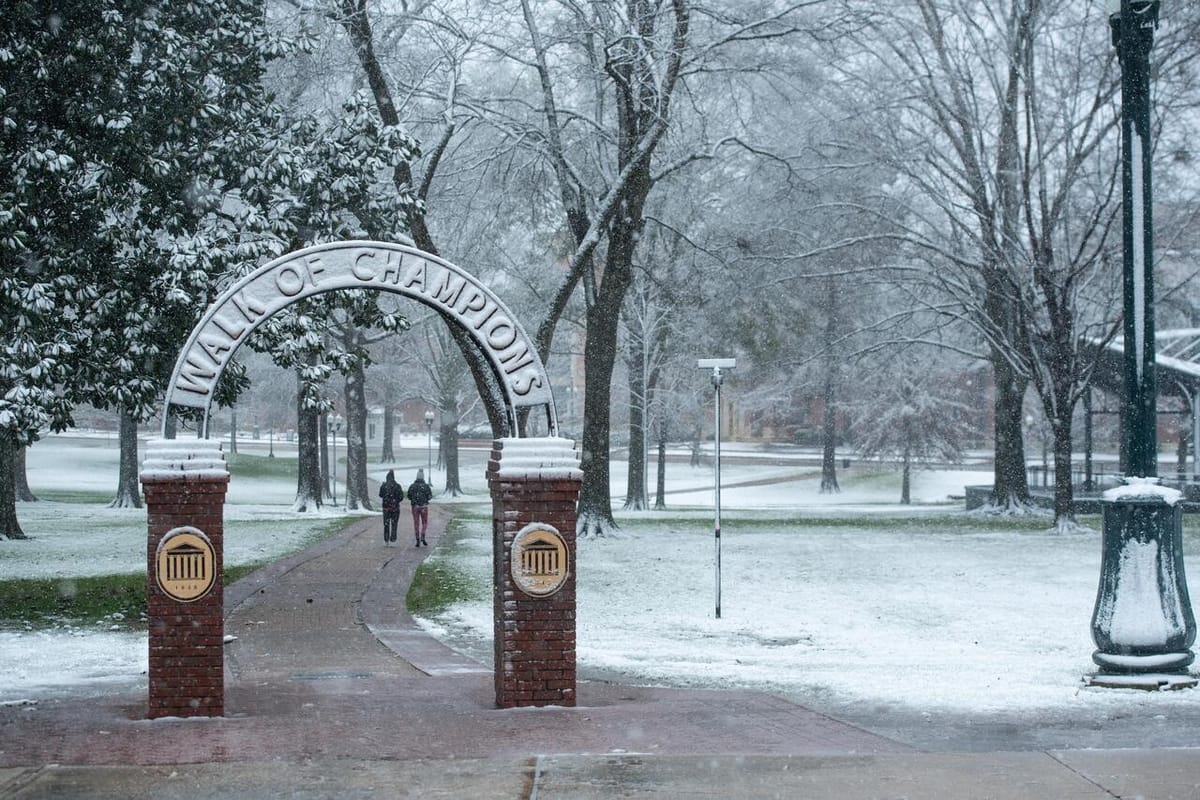
Well over 100 instructors joined a Friday afternoon Zoom session about reworking our syllabi and course calendars in the wake of the historic and catastrophic ice storm in Oxford. The most important takeaway is this: Students should not be penalized for any missing work during the campus closure (from Saturday, January 25–Sunday, February 8).
We are grateful to our faculty colleagues who served as co-faciliators of this session: Rebekah Smith of psychology, Beckie Symula of Biology, and Ben Cooper from the School of Law. Rebekah Smith generously provided the text of her presentation slides as an additional resource.
To get this information out quickly, we share below a bulleted list of key takeaways from the session.
- Communicate clearly and regularly with your students. We encourage instructors to reach out to students regularly as we navigate the return to campus to share updates and to demonstrate care and support.
- Address what has happened and its impacts. In your communications and in class meetings, resist the urge to ignore what has happened in recent weeks. At the very least, acknowledge the challenges we’ve faced and the trauma many have experienced. There is no need to share extensive information about your own experiences or traumas, but letting students know you’ve experienced struggle (in general terms) is entirely appropriate. Most importantly, communicate grace and understanding.
- Be attentive to what information persists in Blackboard. Many students use the Blackboard calendar as a kind of to-do list. Ensure your deadlines have been updated so students aren’t alarmed about having missed a deadline.
- Adjust your course calendar and syllabus as needed.
- Any adjustments to grading/points allocations should avoid penalizing students for the disruptions.
- As you make these adjustments, we encourage you to take your own workload and capacity into consideration. This may include removing or shortening assignments. It’s ok to make less work for yourself in the coming weeks.
- As you adjust your course, focus on the learning outcomes and core concepts. You don’t have to try to cram the same amount of content into a shorter timeframe. You have the agency to make content decisions in most cases, and we encourage you to do so. This might include asking students to weigh in on what course concepts are of greatest interest or need to them (if appropriate).
- If you remove a unit or concepts, you can consider sharing resources from those units in Blackboard as optional supplemental resources—however, these should not have a grade impact.
- As you’re making these decisions, you might think about what your students are likely to remember in a longer-term sense. This Chronicle piece discusses this idea.
- STEM disciplines often have common concept inventories for their classes, such as these. You might find something like this for your discipline helpful as you craft your revised syllabus/course calendar.
- Consider implementing flexible deadlines, especially in the immediate aftermath. As students are returning to Oxford and to classes, their lives may be even more complex and stressful than usual. Deadlines and structure can help support students in completing work, but allowing students to submit work late without penalty, especially in the next few weeks, is a simple and supportive instructional move to ease the transition back to learning. There are many ways to do this, including the use of “best by” dates (versus hard deadlines), assignment extension requests/forms (here’s an example you could modify for your use), automatically-granted extensions, late tokens, and more. (There’s even a study on the use of late submissions soon after a deadline without penalty.)
Additional resources shared by attendees include:
- Wake Forest University has a helpful student workload estimator tool, which can help you calculate a guesstimate of how long a reading or assignment might take students. Here’s a podcast interview with its creator, Betsy Barre, who visited UM last year.
- The University of Virginia has a teaching resources hub that includes resources for teaching in the days after a crisis.
Finally, an attendee asked whether midterm grade/progress report deadlines would be extended. There is no final answer on this—discussions are ongoing—but we suggest planning for either eventuality… with the caveat that you don’t need to do so right away. Instead, we encourage you to focus on the immediate reopening of campus and restarting of classes.