Talking It Out: Why I Switched to Oral Final Exams
One professor shares how he experimented with a new format for his classes’ final exams. While exhausting, Dr. Marvin King found the process to be deeply rewarding and worth continuing in discussion-heavy courses.
Guest post from Dr. Marvin King, Associate Professor of Political Science & African American Studies
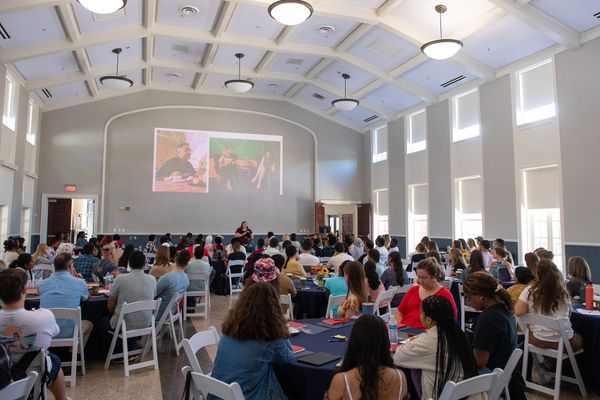
Like many teachers, I had noted that the writing submissions from students had become a little too polished. I am not naive to the reality that education faces a growing challenge of AI-generated coursework, but I was not sure what I could do about it. Fortunately, the Academic Innovations Group and the Center for Excellence in Teaching and Learning offered an AI Institute in January, and I was happy to participate. If you were there, you know the conversations were both inspiring and urgent. I was only able to attend one day of the two-day workshop.
When the day was over, my mind was made up to give oral final exams a try. Now, maybe if I had attended both days, I would have discovered a less labor-intensive solution. Instead, when I exited the workshop, this idea seemed reasonable. Just as important, I have taught for more than 20 years at The University of Mississippi, and I believed I had the bandwidth to try something new. So I decided, what the heck? Let's go analog!
At the same time, I had been giving a serious rethink to my pedagogical approaches. This introspection led me to apply for the Center for Practical Ethics' Character of Leadership Initiative. That experience prompted me to think holistically about the content I teach and the values I want to manifest in the classroom. This matters because I decided that my approach to AI use by students in the classroom needed to come from a place of intellectual humility, respect, and fairness to the students. I figure they get hit over the head all the time. Instead, I would take a transparent approach with them and let them know that this was also an opportunity to rethink how I approach the demonstration of learning objectives in my classes. I wanted an assessment that emphasized conversation, critical thinking, and genuine understanding while eliminating AI-generated responses.
My first step was to orient class learning objectives around this assessment. In the syllabus, on the first day of class, and several times during the semester I made various references to the importance of simply being able to have a competent and confident conversation on the subject matter. I asked my students, "What will you tell your parents you learned in this class when you go home for the summer? That is the essence of the final oral exam. I want you to be able to have a competent and confident conversation on the subject matter."
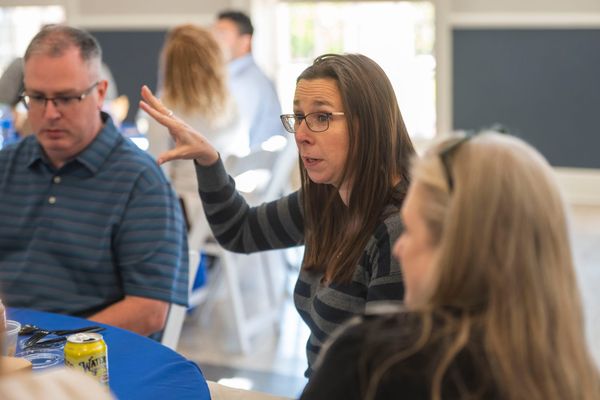
To make the transition work, I knew I had to prepare students well before finals week. My classes have long suffered from selective silence where five percent of the students do 90 percent of the talking. To prime students to get comfortable talking about course material, I incorporated twelve in-class group exercises built around a “question of the day.” Even with the disruptions of Winter Storm Fern, these exercises gave students repeated opportunities to discuss course concepts, explain ideas to one another, and practice thinking out loud in a low-stakes environment (students were graded on participation, not content).
My immediate challenge was scale. During the spring semester, I had approximately 80 students split between two 300-level political science courses: American Federalism and African American Legal Experience. In all honesty, the thought of conducting 80 individual oral exams in a single week was intimidating.
To manage 80 individual appointments, I set up an 8:00 a.m. to 4:30 p.m. window during finals week using Calendly. The system itself worked well, and I did not receive a single complaint about the process. Getting students to actually sign up, however, required considerably more effort. Between repeated class announcements and several reminder emails, I spent too much time nudging students to reserve a slot. Once they did, everything ran smoothly.
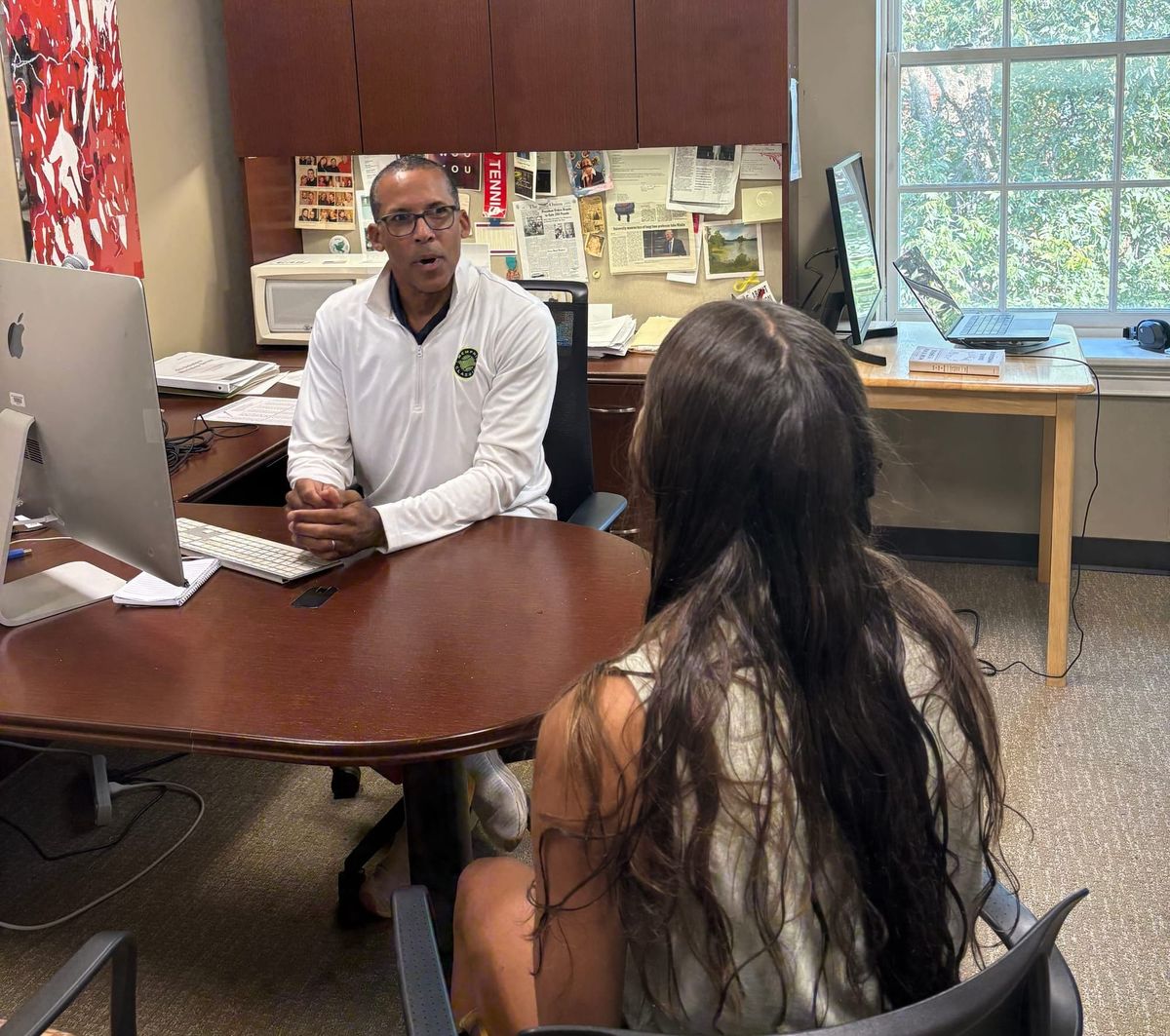
When finals week arrived, the students were far more nervous than I anticipated. To help put them at ease, I started each session with a minute or two of casual conversation about summer plans, internships, jobs, etc. That brief bit of small talk helped lower the temperature in the room before we shifted into course content.
Once we got into the material, the format proved its worth. Rather than relying on memorization or a familiar essay structure, students had to explain concepts in their own words, connect ideas across topics, and respond to follow-up questions in real time. The format required students to demonstrate understanding, application, and analysis rather than simply recall information (the syllabus did emphasize Bloom's Taxonomy).
The oral exam featured five questions, and I gave students the first question prompt ahead of time: "What did you learn in this class?" I told them the second question would be about one of several different policy domains we had studied, and that I would then ask follow-up questions based on their answer. In this sense, they had a chance to steer the conversation.
I also developed a rubric that allowed me to check boxes and jot down comments during the exam itself. By the time each student walked out the door, the grading was essentially complete. Out of 80 students, only one followed up afterward with a question about their evaluation, which suggested the rubric did its job.
Much like written exams, the students who performed better were able to speak more concisely to specific details, whereas students with lower grades were replete with broad generalizations and these students hedged their answers.
Perhaps the most rewarding part of the experience was the opportunity to have one-on-one conversation with each student. In larger classes, meaningful individual interactions are rare, and few students take advantage of office hours. The oral exam created space for those conversations and allowed me to talk with the students as individuals. When the exams were over, most students expressed visible relief, and many commented that the experience was not nearly as difficult as they had expected.
Conducting 80 individual exams in a week is exhausting. For real. I can also confirm that my voice was more exhausted than theirs. Despite that, I believe the experiment was a net positive. Beyond eliminating AI concerns, the format strengthened student engagement, encouraged deeper learning, and created opportunities for personal interaction that rarely occur during a typical semester.
Potential downsides might be that I eventually earn a reputation as “the oral exam professor.” We will see if that affects enrollment in my classes. Additionally, now that I know to recognize that students might be anxious at the start of the exam I will do more to familiarize students about the process to help calm jittery nerves. At the same time, it is only a matter of time before these future graduates are asked to defend their ideas and work product in front of colleagues and supervisors, so if this prepares them for life, then I am glad to help.
For discussion-oriented classes, talking it out has proven to be well worth the effort.