Recap: Effective and Compassionate Strategies for Low- and No-Tech Assessments
A CETL session exploring oral exams and in-class writing gave UM instructors ideas on supporting learning in the age of AI.

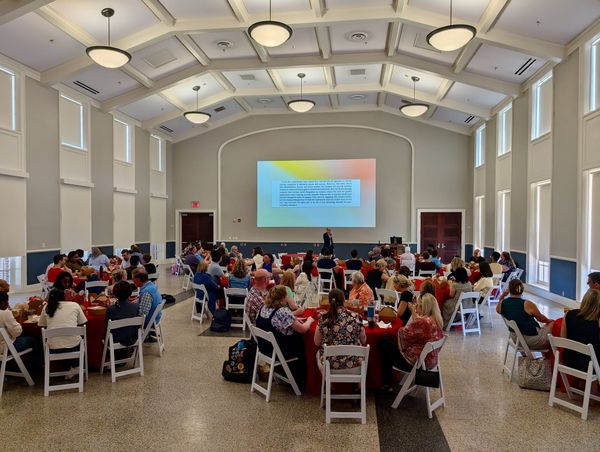
On Wednesday, October 21, CETL hosted a lunchtime workshop, “Effective and Compassionate Strategies for Low- and No-Tech Assessments,” led by Emily Pitts Donahoe, associate director of instructional support. As generative artificial intelligence (AI) continues to reshape how students approach coursework, many instructors are reconsidering traditional assessment methods. The session explored how oral exams and in-class writing can offer opportunities to assess students' understanding while remaining mindful of accessibility and student well-being.
The workshop began with participants discussing their motivations for exploring low- and no-tech assessments. Unsurprisingly, concerns about AI-generated work emerged as a central theme, particularly whether students are developing the critical thinking skills necessary to demonstrate their own understanding. However, participants also raised practical concerns, including the time required to implement these assessments, challenges associated with larger classes, and the potential anxiety they may create for students.
Emily first discussed oral exams, highlighting their potential to promote accountability, strengthen communication skills, and provide opportunities for immediate feedback. Several approaches demonstrated how oral assessments might work across different disciplines and class sizes. For example, UM political science professor Marvin King incorporated oral final exams for approximately 80 students, using structured preparation activities and rubrics to evaluate their understanding. Similarly, UM chemistry professor Eden Tanner uses brief “Chemistry Conversations,” in which students respond to written prompts and verbally explain their reasoning.
Emily emphasized several benefits of oral exams, including their ability to assess students’ understanding in real time, strengthen communication skills, and provide opportunities for immediate feedback. However, these benefits come with potential trade-offs, such as increased performance anxiety, accessibility concerns, and the time required to implement oral exams, particularly in larger classes. To address these challenges, Emily encouraged instructors to establish clear expectations, provide opportunities for students to practice, and use structured grading rubrics. Allowing flexibility in how students engage during oral exams can also help reduce anxiety and create more accessible assessment experiences.
The session then shifted to in-class writing, another approach that allows instructors to observe students' thinking and writing processes more directly. Emily shared several creative models, including Lily Abadal's scaffolded term paper, in which students complete weekly handwritten activities that build toward a final essay. Another approach, James Seitz's in-class writing lab, allows students to write using computers with Wi-Fi disabled, emphasizing intellectual engagement rather than polished final products.
Emily highlighted several benefits of in-class writing, including providing students with dedicated time to focus, engage in critical thinking, and demonstrate their understanding. However, these benefits come with potential trade-offs, such as increased anxiety from timed writing activities, accessibility challenges associated with handwriting, and the amount of class time required. To address these challenges, Emily encouraged instructors to consider flexible approaches, such as allowing students to use computers under certain conditions and emphasizing the writing process rather than solely evaluating the final product.
During the closing discussion, attendees considered how these approaches might translate across disciplines. Questions about class size, grading demands, accessibility, and disciplinary expectations highlighted that no single assessment method will work for every course. Participants also reflected on the importance of aligning assessments with learning objectives and providing students with sufficient opportunities to prepare.
A central takeaway from the workshop was that low- and no-tech assessments should do more than discourage AI use. When thoughtfully designed, these approaches can create meaningful opportunities for students to demonstrate their knowledge, develop critical thinking skills, and engage more deeply with course material. Rather than simply returning to traditional assessment practices, instructors were encouraged to consider how these methods might be adapted to support student learning with both effectiveness and compassion.
For instructors interested in exploring these approaches further, Emily shared a resource guide featuring research, practical examples, and additional strategies for implementing oral exams and in-class writing.
This session was CETL’s final lunchtime workshop of the fall semester. We’re looking forward to engaging with readers at our spring events, which will be announced in January! In the meantime, we’re still able to offer individual consultations, classroom observations, or student feedback sessions to individual instructors or to work with departments on offerings for their faculty.
We also welcome proposals from UM instructors who would like to collaborate with CETL on workshops and blog posts. If there is educational research or a pedagogical practice you’d like to share with the UM teaching community, please fill out one of the linked Google forms above.