Recap: Answering Your Most Pressing Disability / Accessibility Questions
Dr. Liz Norell answered pressing questions about accessibility, shared UM’s myriad resources for instructors, and shed light on the accommodations process.
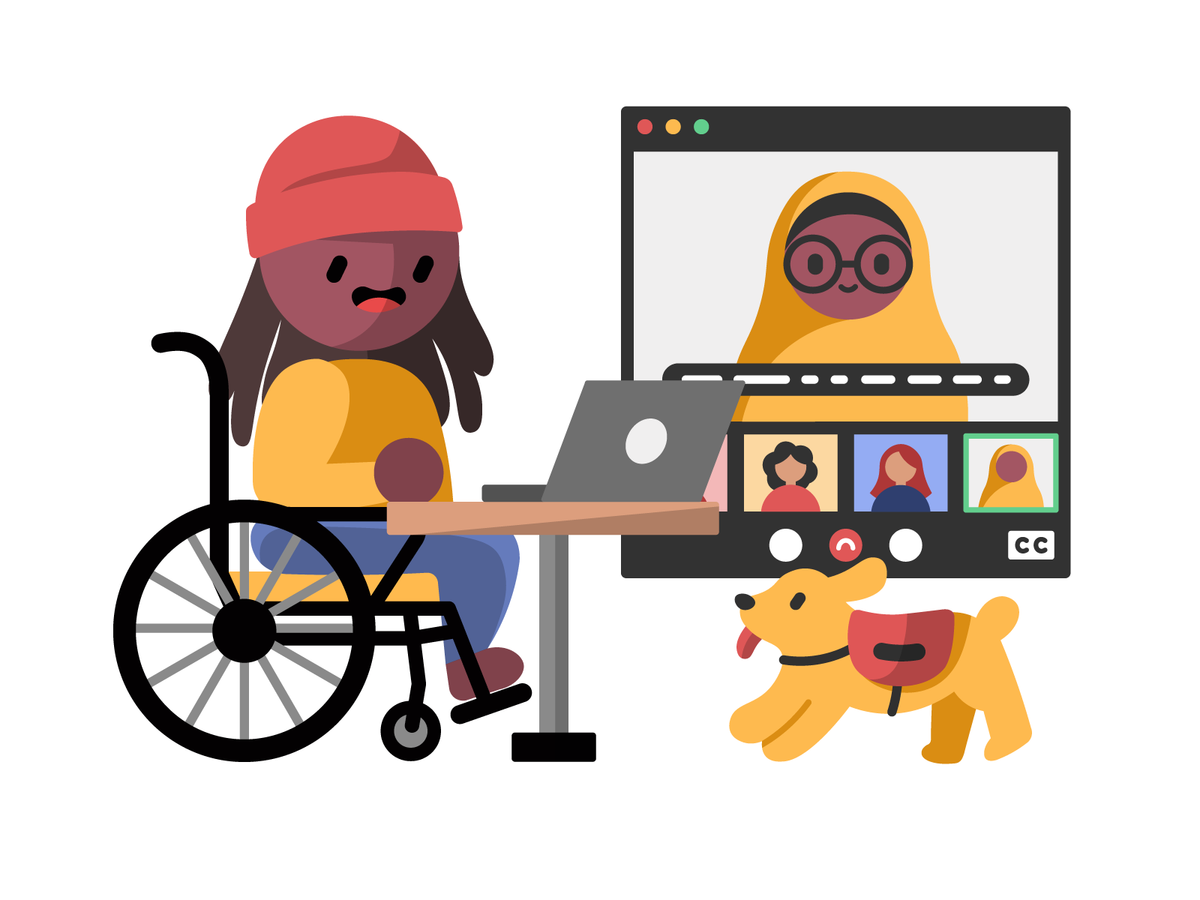
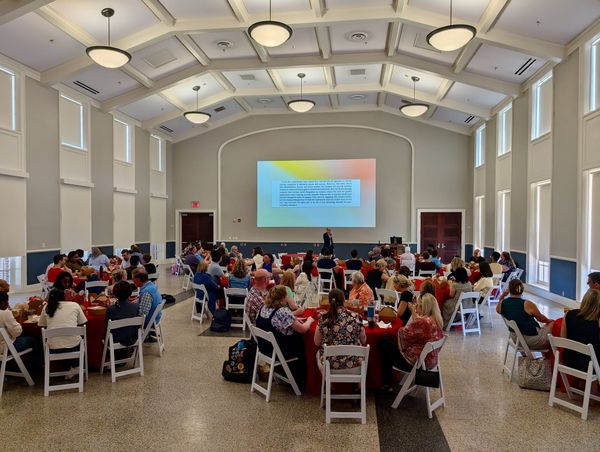
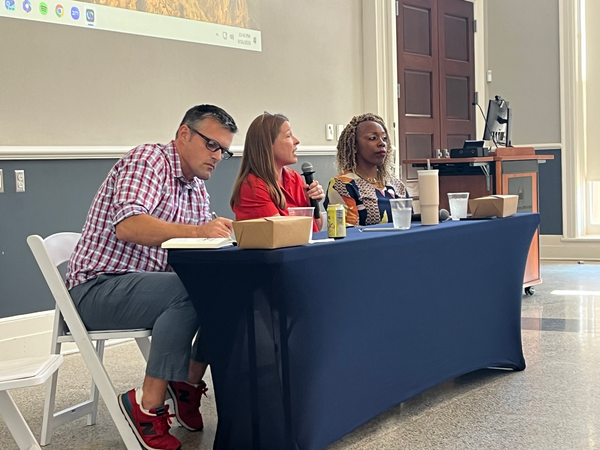
On Wednesday, October 14, CETL’s Liz Norell partnered with the University of Mississippi’s offices of Student Disability Services and Digital Accessibility to host a session “Answering Your Most Pressing Disability / Accessibility Questions.” The presentation focused on the accommodations process, common accommodations, and strategies to increase accessibility for all learners in our classrooms.
The session began with an overview of the documentation required, and the protocol followed, to receive accommodations through the SDS office. Attendees learned that SDS can request information from medical providers outlining what essential classroom functions and characteristics require accommodations and what specific accommodations might be needed. Importantly, only SDS officers who are evaluating the request for accommodations have the right to ask for, review, and assess medical information; instructors and supervisors are informed only of the vetted accommodation needs—not the diagnoses, medical history, or rationale for providing these accommodations. Instructors are welcome to contact the SDS office for help figuring out how to implement these accommodations without changing essential classroom functions and goals.
The most common accommodations our students at UM require is extra time on assignments (often paired with reduced-distraction testing spaces) and flexible attendance. Liz noted that there has been a marked increase in the number of students who are registered with SDS in recent years. Attendees also learned that an estimated 63% of students who may qualify for accommodations do not seek them. That’s about 6,800 students in our community who might qualify for accommodations but will never formally receive them through SDS. Incorporating accessible practices in our teaching might affect more students than we realize.
Attendees were invited to complete an activity in small groups that encouraged us to think about the complexity of disability. Each table group was given a list of possible accommodations and was asked to consider what challenges each of these accommodations might help to eliminate or ease for our students. These answers were shared with the group and collated and shared with attendees via email after the event. Some key takeaways were the importance of universal design for learning (UDL), the ease by which these accommodations might be provided, and the positive impact implementing accommodations might have.
Liz then welcomed Jennifer Bland, UM’s Digital Accessibility Coordinator, to give attendees some resources which might allow for more accessible course content. The Digital Accessibility office works with instructors to implement accommodations. Their most commonly used services are closed captioning of recorded videos and increasing the accessibility of digital files (which 7,000 students used in Blackboard last academic year—significantly more than are registered with SDS). And their office has myriad resources for instructors! The UM document converter can convert PDF files to audio files or other more accessible formats. They can help instructors utilize Blackboard Ally to assess the accessibility rating of their course. Their tool Mathpix can convert images of equations (even those which are handwritten) into Word Documents or PDFs. VerbitLive captions provides live captions for in person meetings or events and creates transcripts and summaries which might help some of our students better access lecture materials. For more information about UM’s accessibility resources, visit their website or email accessibility@olemiss.edu.
The session ended with a call to action. When designing their courses, and outlining the essential functions of their course, instructors should ask themselves a key question: is it essential? When evaluating accommodations, SDS focuses on what components of the course are essential to the learning goals, ensuring that accommodations do not lower standards or compromise essential outcomes. In order to boost accessibility, instructors should provide clear directions, in writing, with transparent rationales. They should add predictable structure to their classes. And they should incorporate student choice and flexibility wherever possible, with default options that are clearly articulated. Incorporating these scaffolds into our instructional spaces will make them more accessible for all learners and move us towards a universal design for learning which encourages success for all students.
You can find a link to the workshop slides here.
This week, CETL hosted its final lunchtime workshop of the fall semester. We’re looking forward to engaging with readers at our spring events, which will be announced in January! In the meantime, we’re still able to offer individual consultations, classroom observations, or student feedback sessions to individual instructors or to work with departments on offerings for their faculty.
We also welcome proposals from UM instructors who would like to collaborate with CETL on workshops and blog posts. If there is educational research or a pedagogical practice you’d like to share with the UM teaching community, please fill out one of the linked Google forms above.