Recap: What Better Teaching Can Do
Dr. David Gooblar (University of Iowa) visited in September to share his research on supporting students through good teaching.
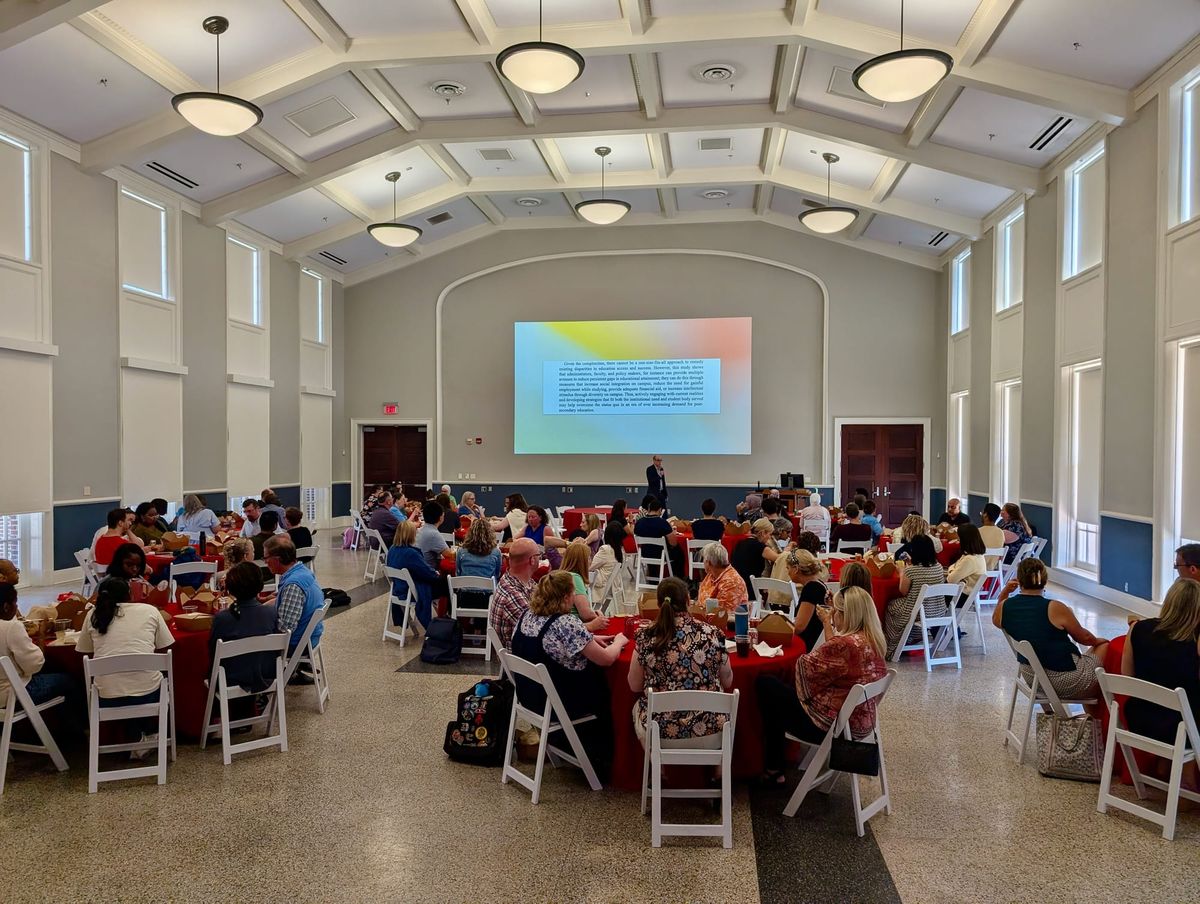
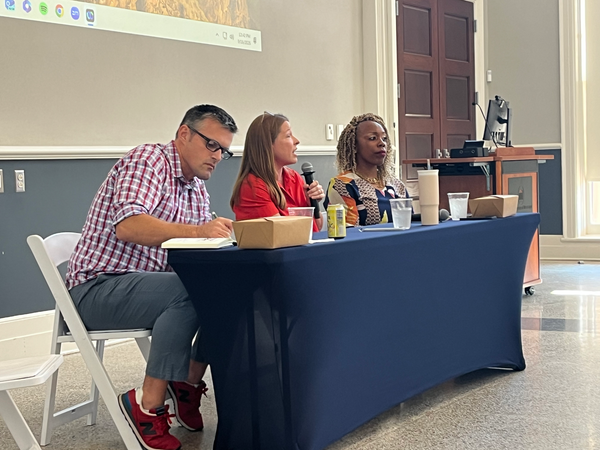
On Wednesday, September 23, CETL was thrilled to welcome guest speaker Dr. David Gooblar to campus. Dr. Gooblar is an associate professor of English at the University of Iowa and the author of two recent books on teaching: The Missing Course: Everything They Never Taught You About College Teaching and One Classroom at a Time: How Better Teaching Can Make College More Equitable. His talk, entitled “What Better Teaching Can Do,” was attended by almost 100 members of the UM teaching community.
Dr. Gooblar began the session by sharing some sobering statistics about college graduation rates, broken down by race/ethnicity, income, and disability status. This research tells us that disabled students, socioeconomically disadvantaged students, and Black, Latinx, and Native American students are all less likely to graduate college within six years than their peers. These have, historically, been very persistent gaps.
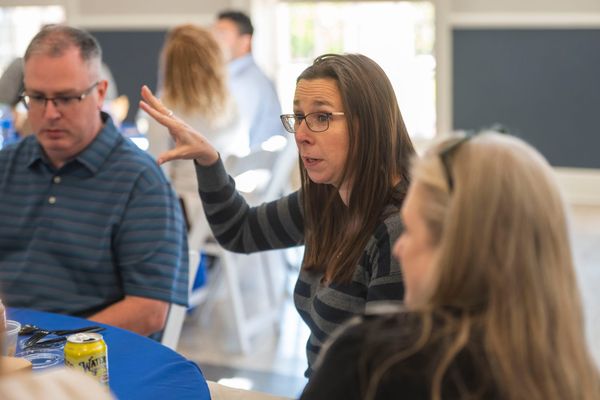
After sharing these statistics, Dr. Gooblar asked participants to guess the strongest predictor of six-year degree completion, according to the research. They had a variety of ideas: student engagement, sense of belonging, financial support, mentorship, etc. But no table guessed the exact answer. According to the work Dr. Gooblar cited, the strongest predictor of student graduation is first-year GPA.
In one sense this seems obvious. And it also seems obvious that the most effective way to raise GPAs would be to look closely at what happens in college classrooms. Yet, neither the study mentioned above nor other large-scale efforts to close equity gaps make any recommendations about improving college teaching.
However, there is lots of research on how good teaching can close equity gaps in the classroom. And all of these studies point to the fact that students do better in school when instructors account for the many structural factors that influence students’ lives beyond the classroom.
When taken together, these research findings create an “unfortunate symmetry.” According to Dr. Gooblar:
“Institutional leaders, policy makers, and administrators, when they try to improve institutions, tend to overlook what goes on inside the classroom. Instructors, when they try to help their students learn, tend to overlook what influences or affects students’ lives outside the classroom.”
This realization is what led to Dr. Gooblar’s second book One Classroom at a Time: How Better Teaching Can Make College More Equitable. There are many groups of students for whom better teaching can make a difference. But as one example, Dr. Gooblar turned to the plight of economically insecure students—about half of students attending college today.
He noted that economic insecurity is more than a collection of practical problems; it’s also a “psychological situation” our students inhabit. Drawing on research by Dr. Jennifer Sheehy-Skeffington, he shared three important components of this psychological situation: scarcity, instability, and stigma. Scarcity can diminish students’ sense of control and cause them to shift their focus to pressing needs only. Instability can lead students to focus more on short-term goals than long-term ones and prioritize avoiding threats rather than maximizing opportunities. And stigma can lead to a preoccupation with status, a constant awareness of where they stand in a hierarchy.
These habits of mind are adapted to help people deal with poverty—but they are maladaptive, in a number of ways, for learning. So, what can instructors do to help economically insecure students succeed in their classes? Dr. Gooblar proposed three guiding principles.
First, economically insecure students benefit from structure. Drawing on three research articles, he showed that structure, defined as active engagement in in-class activities, benefits all students but is especially beneficial for marginalized students.
Second, the best kind of structure is predictable, transparent structure. As Mary-Ann Winkelmas’s extensive research on transparency in the classroom has shown, being explicit about the “purpose, task, and criteria” of the work we ask students to do has outsized effects on the success of underserved college students. Dr. Gooblar also pointed to a study that showed that short, frequent quizzing—as opposed to a few high-stakes exams—helped to reduce gaps in performance between marginalized students and their peers.
Finally, wherever possible, we should downplay competition and encourage collaboration. Dr. Gooblar shared research indicating that classroom competition can lead to an increased sense of imposter syndrome and poorer academic performance among first-generation students especially. Other studies have shown that a more collaborative environment has outsized benefits for people from working-class contexts.
These are just a few examples of the ways that better classroom teaching might help close equity gaps and create an environment in which every student can succeed, no matter their background or identity. When instructors take into account students’ lives outside the classroom, and when institutions provide support to those working inside the classroom, all our students benefit.
Our thanks to Dr. Gooblar for a fantastic talk! You can find Dr. Gooblar’s presentation slides here. If you’re a member of the UM teaching community, we invite you to join us for two remaining events in October: a session for Answering Your Most Pressing Disability/Accessibility Questions and a workshop on Effective and Compassionate Strategies for Low- (and No-) Tech Assessments.