Recap: Facilitating Effective Classroom Discussions
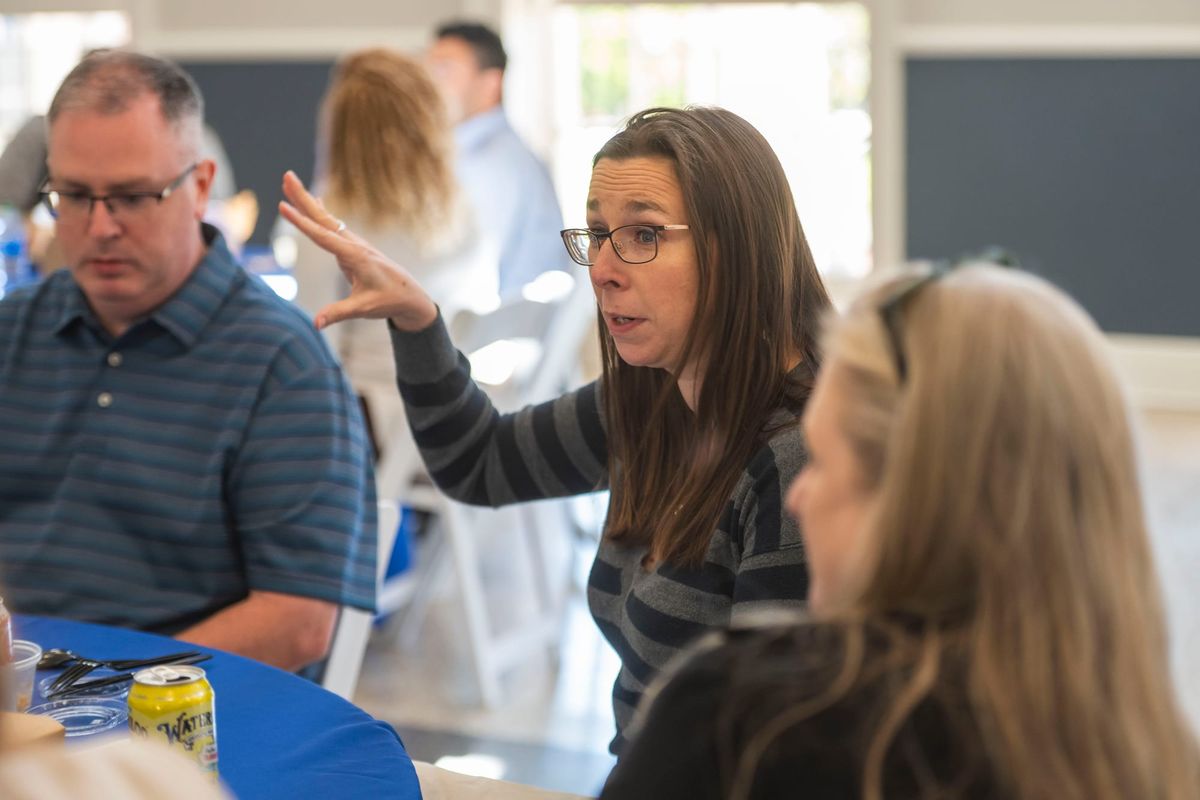
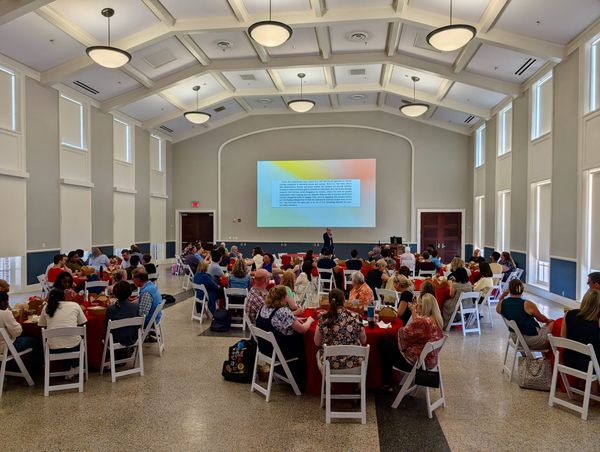
On Wednesday, September 2, CETL kicked off our fall workshops with a session on “Facilitating Effective Classroom Discussions: A Tried-and-True Way to Maximize Student Learning and Engagement.”
The facilitator for the workshop, CETL Senior Director Josh Eyler, started off by asking attendees to share the most challenging part of facilitating discussions. The biggest theme was simply getting students to participate, particularly at low-energy times like early in the morning or after lunch. Another common concern was student preparedness: what should we do when students come to class without having done the work necessary to discuss a topic productively?
With these concerns in mind, Josh turned to the research-based rationale for discussion as a pedagogical strategy. He pointed out that we’re a deeply social species: “Social interactions govern every aspect of our lives, and learning is no different,” he noted. Discussion provides an important social outlet for students to develop knowledge and skills.
Discussion can also help us get students to the “zone of proximal development,” the sweet spot between what a learner can do unsupported and what they can’t do even with support. In other words: the zone where learning happens. Josh explained that “We can only learn so much on our own before we need someone to help us push past a learning barrier.” Discussion with others can often be the push that students need to understand something more deeply.
Josh then introduced several key elements of discussion-based pedagogy, including:
- A clear rationale for why discussion is important for learning in the course
- An evaluation plan
- Assessment of prior knowledge of content and prior experience with discussion
- Questions that are neither too specific nor too open (though both can be helpful at the very beginning of a discussion)
- Guidance to help them push points further; coaching on how to engage with others’ ideas
- Tolerance for uncertainty
- Time at the end of the class meeting to synthesize and connect to larger learning goals
He also shared some thoughts from students in his own class on the most difficult part of participating in discussions. Overwhelmingly, students talked about a lack of confidence or a fear of being judged for their contributions. The social pressures of the classroom have always been a factor in class discussion, but Josh noted that we are seeing increasing indications that the pandemic has intensified these concerns.
In considering how to handle obstacles to discussion, attendees shared several strategies. They suggested taking a positive tone to help students build confidence; asking students to explain their thought processes for right or wrong answers; and slowing down the pace of discussion through writing or thinking time.
Finally, Josh introduced some actions instructors can take before, during, and after a discussion to make it successful.
Before discussions, it’s important to build classroom community, provide opportunities for students to practice the discussion skills they need, and share a roadmap for the discussion ahead of time, so that all parties know where the class is headed.
During discussions, it’s important to maintain a sense of focus, ask questions that prompt students’ curiosity, and provide a clear structure. Some structuring devices might include:
- Assigning roles within small group discussions
- Giving time for students to formulate responses through writing
- Asking students to speak in turn or in a specific order
- Facilitating discussion activities like a jigsaw, snowball (or pyramid), or fishbowl
- Allowing moments of silence during which students can gather their thoughts
After discussions, instructors can synthesize key takeaways from the class session, make time for reflection on the discussion, and return to what students have learned in subsequent class periods.
Josh closed the session with a final reminder: discussions are about building knowledge collectively. Facilitating discussion may be an old-school pedagogy—but it remains a tried-and-true way to maximize learning and engagement.
We had a great discussion about discussion! If you’d like to access Josh’s slides, you can do so here. If you’re a member of the UM community, we look forward to seeing you at other CETL events this semester.