Recap: Welcome Week takeaways
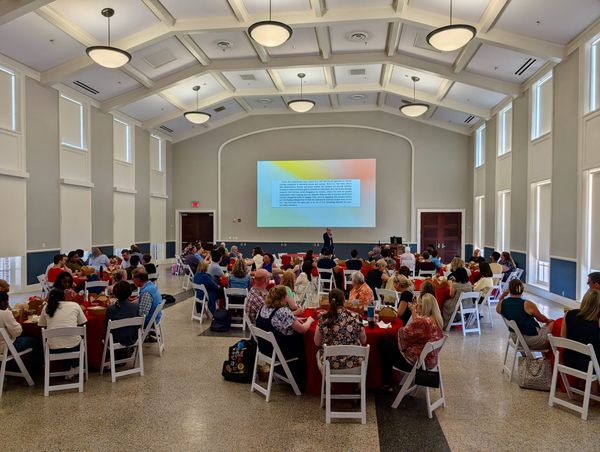
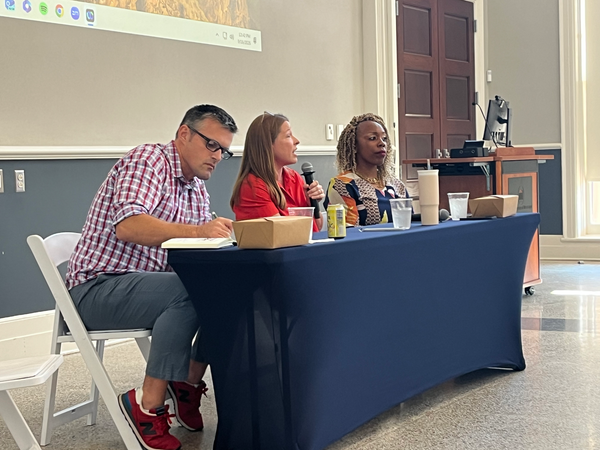
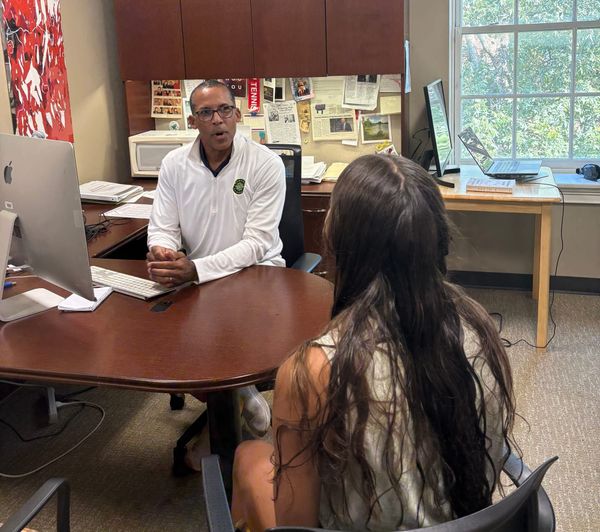
CETL offered multiple opportunities for instructors to plan for an engaging fall semester ahead. Here are a few of our key takeaways.

The week before classes begin is often a whirlwind of meetings, class prep, and email sorting. Toss in technology changes, and you’ve got a recipe for a busy time. As your teaching support team, the Center for Excellence in Teaching and Learning offered a series of programs to help instructors plan their semesters with intention.
Ten UDL Moves
On Monday, we explored ten Universal Design for Learning (UDL) moves that can help smooth your semester. The basic premise behind UDL is to build accessibility right into your course from the beginning, which allows all students—including those who are disabled and those with varying degrees of college preparation—to be successful. In the program, we discussed a variety of ways that using the UDL 3.0 framework can improve the semester for instructors and students alike.
Among the ten moves we discussed are:
- Start small and make incremental change. You don’t need to change everything all at once! Consider looking for just one way you could expand choice for your students—or what Thomas J. Tobin and Kirsten Behling call the “plus one” approach.
- Provide ways for students to monitor their progress, perhaps through the use of a checklist (analog or embedded into Blackboard). This can help reduce cognitive load and relieve student stress. It’s also a terrific way to reduce student reliance on executive function.
- Implement wise feedback, a protocol developed by psychologists that has been shown to boost motivation and student persistence across a range of identities and ability levels. Wise feedback communicates high standards, a belief in students’ ability to meet those standards, and specific actionable guidance. If you join CETL’s faculty reading group, you’ll learn more about wise feedback when we explore David Yeager’s book, 10 to 25: The Science of Motivating Young People, together this fall. UM faculty are welcome to register here.
Access the slides from this session here.
Syllabus Boot Camp
While we know that your syllabi are likely (hopefully!) already drafted, it’s worth taking a second look at the CETL syllabus template for ideas on framing course policies and creating a student-friendly, warm syllabus. There is strong evidence that doing so boosts students’ motivation and success. Creating a student-friendly and invitational syllabus goes a long way toward establishing a positive learning community and fostering trust, too—all things that we know turbocharge student learning.
You can access the latest CETL syllabus template here. We also have teaching resources available on our website.
Course Design: What do you want your students to remember in 20 years?
In a 2018 Chronicle of Higher Education article, James Lang shared his experience talking with faculty about how they would answer the core question posed by the article (and session) title. “A biologist made this point most clearly,” he writes. “‘Everything I learned as an undergraduate, 25 years ago, is out of date. The same will be true for my students in 25 years.’”
If this is true, what does that mean for what we teach and how we teach it? When we focus on immediacy and urgency in designing our courses—understandable impulses though they are—we may well be contributing to burnout, fears about AI, distance from the joy that we feel for our disciplines, and/or a decreased sense of purpose.
Pausing to ask ourselves what we hope students will remember two decades on can help bring us back to the most important things. From there, we can employ backward design to ensure our courses are pointing more clearly in those directions.
Access Josh’s presentation materials here.
Poll Everywhere
In collaboration with the Faculty Technology Development Center, we hosted two sessions on Poll Everywhere, UM’s new technology solution for taking attendance and engaging students in more active learning. After a quick demonstration on how to set up this tool, we showed a few different ideas on how to use it to encourage student participation through a variety of different poll types.
While FTDC is the office to support your Poll Everywhere technical questions, we did want to ensure everyone has access to the recording of Thursday’s session, where we briefly review the platform’s affordances. CETL is always happy to talk about how you can use this tool to support student engagement. For additional tech support, please reach out to FTDC.
Fall programs
You can find the full slate of our fall programming on our website, with links to register for all of our upcoming events. We hope to see you at one soon!